Go back
Go back
Data First Workplace — Website Design | 2025
Data First Workplace — Website Design | 2025
Overview
Overview
Data First Workplace had built a genuinely valuable B2B SaaS product — BI adoption intelligence — but “BI adoption intelligence” doesn’t explain itself. The product had to speak to two completely different audiences on the same website: data leaders who needed depth and specificity, and executives who needed to feel confident within seconds. Without the right website, the right people would never stay long enough to care.
Data First Workplace had built a genuinely valuable B2B SaaS product — BI adoption intelligence — but “BI adoption intelligence” doesn’t explain itself. The product had to speak to two completely different audiences on the same website: data leaders who needed depth and specificity, and executives who needed to feel confident within seconds. Without the right website, the right people would never stay long enough to care.
My role
My role
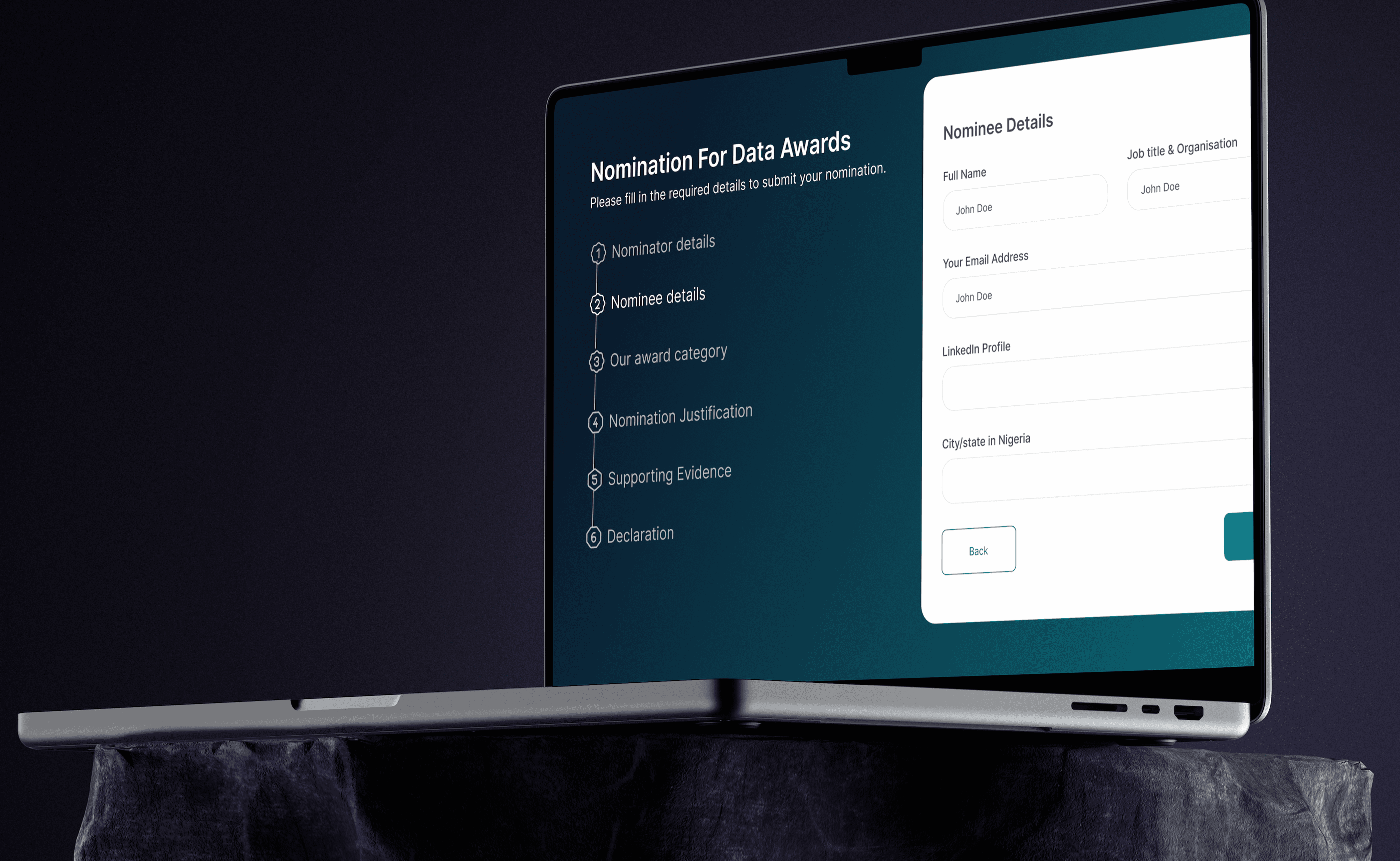
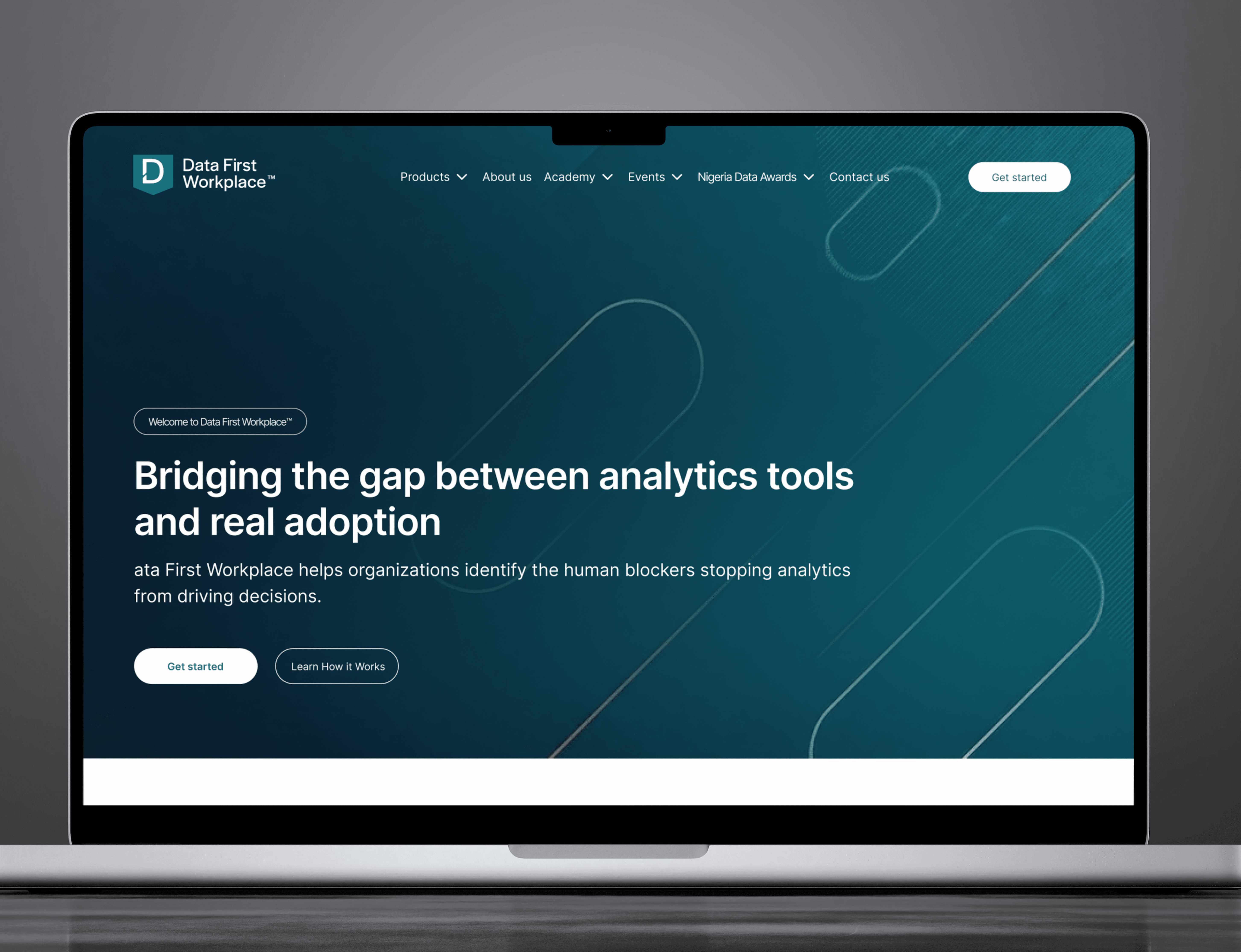
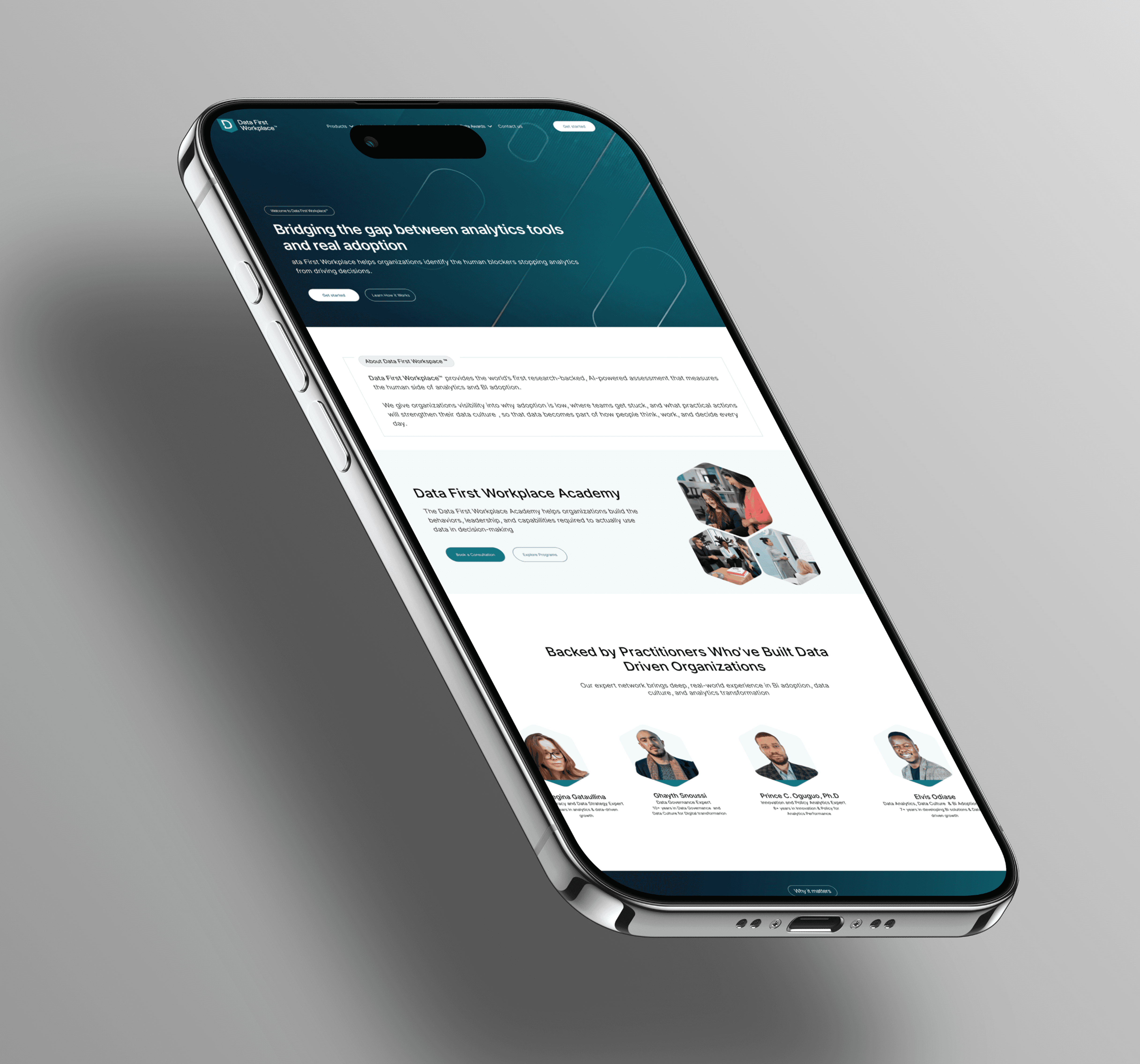
I was brought in to design their marketing website from the ground up — full information architecture, page structure, visual hierarchy, and design language across five pages. Three to four weeks, solo.
As the UI Designer, I was responsible for bringing the product vision to life visually.

The Challenge
The Challenge
They were at a critical point. They needed to onboard their first clients and get in front of investors — at the same time. The problem was one website had to speak to two completely different people. A data leader who wants to see exactly how the product works, what integrations exist, and what the numbers look like. And an executive who needs to feel confident in 10 seconds or leave.
Too technical and you lose the executive. Too surface-level and you lose the data leader. Too much of everything and you lose both.
My job was to find the version of this website that makes both people feel like it was built specifically for them, and makes the product self-explanatory enough that nobody needs a sales call just to understand what it does.
They were at a critical point. They needed to onboard their first clients and get in front of investors — at the same time. The problem was one website had to speak to two completely different people. A data leader who wants to see exactly how the product works, what integrations exist, and what the numbers look like. And an executive who needs to feel confident in 10 seconds or leave.
Too technical and you lose the executive. Too surface-level and you lose the data leader. Too much of everything and you lose both.
My job was to find the version of this website that makes both people feel like it was built specifically for them, and makes the product self-explanatory enough that nobody needs a sales call just to understand what it does.
What I Did
What I Did
Honestly, I spent as much time convincing as I did designing. And looking back, that was the right call.
The client came in attached to their existing brand colors — muted, safe, forgettable. Early on I knew those colors weren't going to carry the weight this website needed. So before I opened Figma, I had a conversation. I walked them through why the gradient direction I was proposing would create energy without feeling off-brand.
Why the motion in the hero section wasn't decoration — it was the first signal to a visitor that this product is alive, modern, and worth their attention. Why smooth transitions and animations weren't a developer flourish but a trust mechanism — they make a product feel polished before anyone reads a single word.
They pushed back. I pushed back harder — with reasons, not opinions. Eventually they saw it. That process of earning trust on design decisions shaped how the rest of the project went.
On the structural side, I started with questions, not layouts. For every page I asked: who arrives here, what do they already know, and what do they need to feel before they leave? That gave me a framework for holding both audiences at once — depth for the data leader, clarity for the executive — without letting either one collapse into the other.
I scrapped entire sections mid-process when I realised they were solving the wrong problem. A features section that read like a spec sheet. A hero that led with the product name instead of the outcome. Each time I cut something, I replaced it with a layout that answered a real question a real visitor would have.
I stayed close to the client throughout. Every round of feedback wasn't just approval-seeking — it was intelligence. What confused them usually confused the target user too. So I used their reactions to sharpen the copy, tighten the hierarchy, and make the product more self-explanatory with every iteration.
Honestly, I spent as much time convincing as I did designing. And looking back, that was the right call.
The client came in attached to their existing brand colors — muted, safe, forgettable. Early on I knew those colors weren't going to carry the weight this website needed. So before I opened Figma, I had a conversation. I walked them through why the gradient direction I was proposing would create energy without feeling off-brand.
Why the motion in the hero section wasn't decoration — it was the first signal to a visitor that this product is alive, modern, and worth their attention. Why smooth transitions and animations weren't a developer flourish but a trust mechanism — they make a product feel polished before anyone reads a single word.
They pushed back. I pushed back harder — with reasons, not opinions. Eventually they saw it. That process of earning trust on design decisions shaped how the rest of the project went.
On the structural side, I started with questions, not layouts. For every page I asked: who arrives here, what do they already know, and what do they need to feel before they leave? That gave me a framework for holding both audiences at once — depth for the data leader, clarity for the executive — without letting either one collapse into the other.
I scrapped entire sections mid-process when I realised they were solving the wrong problem. A features section that read like a spec sheet. A hero that led with the product name instead of the outcome. Each time I cut something, I replaced it with a layout that answered a real question a real visitor would have.
I stayed close to the client throughout. Every round of feedback wasn't just approval-seeking — it was intelligence. What confused them usually confused the target user too. So I used their reactions to sharpen the copy, tighten the hierarchy, and make the product more self-explanatory with every iteration.
The Result
The Result
Delivered in 4 weeks. Major client onboarded within 4 weeks of launch.
The client's feedback said it all, they loved how the information was arranged and how the product finally felt different from every competitor in the space. For a B2B SaaS product trying to stand out in a crowded market, that's not a small thing. That's the website doing its job.
Delivered in 4 weeks. Major client onboarded within 4 weeks of launch.
The client's feedback said it all, they loved how the information was arranged and how the product finally felt different from every competitor in the space. For a B2B SaaS product trying to stand out in a crowded market, that's not a small thing. That's the website doing its job.
What I Learned
What I Learned
The hardest design problems are structural, not visual. When a product is powerful but hard to explain, the designer’s job is to build a clear path through the complexity. Close collaboration with the client was the difference — every feedback round was a step closer to the truth of what needed to be communicated.
The hardest design problems are structural, not visual. When a product is powerful but hard to explain, the designer’s job is to build a clear path through the complexity. Close collaboration with the client was the difference — every feedback round was a step closer to the truth of what needed to be communicated.